
Loading...
Serving Madison, CT and surrounding areas. (475) 522-8016
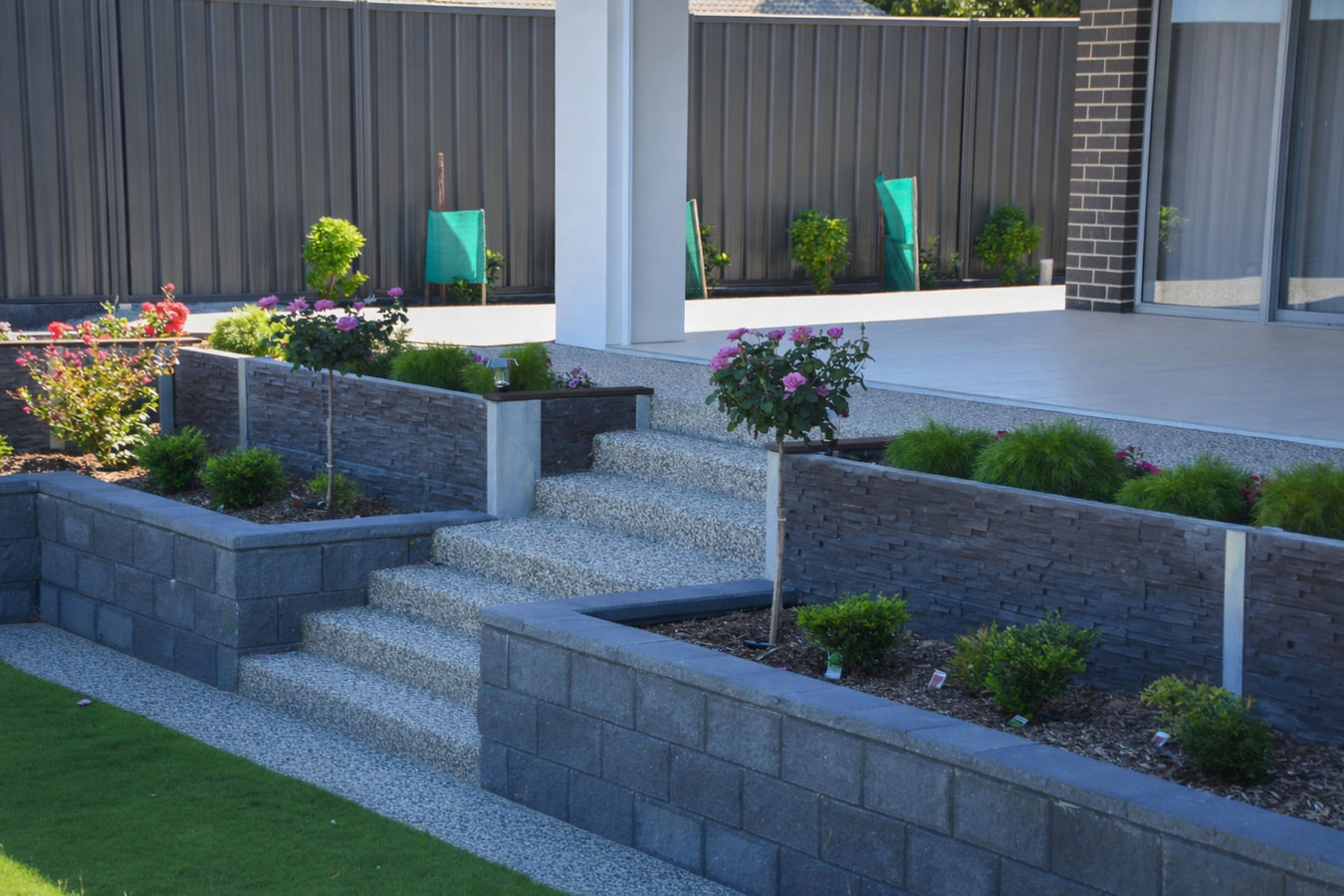
Eroding yard, crumbling driveway edge, or a failing old wall? We build concrete retaining walls in Madison set below the frost line, drained properly, and permitted through the town - walls that hold for decades.
Concrete retaining walls in Madison, CT hold back soil on slopes and prevent erosion by anchoring into a frost-depth footing with a gravel drainage layer behind the wall - most residential projects take two to five days from excavation to cleanup depending on height and length.
Many Madison homeowners come to us after watching soil wash downhill each spring, seeing a driveway edge crumble, or dealing with an older wall that has started to lean. This area has naturally sloped lots - especially in neighborhoods set back from the shoreline toward the inland hills - and concrete retaining walls are often the only practical way to create usable flat yard space or stop soil from moving toward a foundation. A wall that is built correctly the first time, with proper footings and drainage, should require very little attention for 50 years or more. The same principle applies whether you are looking at a poured wall or a block retaining wall - the footing and drainage details determine how long it stands.
If you are also thinking about the stairs that connect a new level to the rest of your yard, our concrete steps construction service handles that as part of the same project.
If soil is creeping downhill after rain, leaving bare patches or depositing dirt at the base of a slope, your yard is actively eroding. In Madison, this often accelerates on properties with natural grades after the heavy spring rains common along the Connecticut shoreline. A retaining wall stops that movement permanently rather than leaving you patching bare spots each season.
If water consistently collects near your home's foundation after rain instead of draining away, the grade around your house may be directing water toward the structure. A retaining wall combined with proper regrading can redirect that water and protect your basement or crawl space from long-term moisture damage.
When the soil alongside a driveway or path starts to sink or fall away, the pavement edge often cracks and breaks with it. This is a common problem on Madison's sloped residential lots where driveways cut across grades. Left alone, it worsens every season - a retaining wall along that edge stabilizes the soil and protects the pavement.
If an older wall - whether concrete, stone, or timber - is tilting outward, showing large cracks, or pulling away from the soil behind it, the drainage or base has likely failed. Madison's freeze-thaw winters accelerate this kind of deterioration. Waiting too long can mean a sudden collapse that damages landscaping, fencing, or a neighboring property.
We build poured concrete retaining walls for residential properties across Madison - from short garden-bed borders to taller walls that hold back significant grades. Every project starts with a site visit where we assess the slope, check for any signs of hydrostatic pressure, and confirm whether a permit is required. For taller walls, we also coordinate the engineering review that Madison requires before the Building Department will issue a permit.
Walls often connect to other work on the same property. When a new wall creates a level-change that needs safe access, concrete steps are a natural addition we plan together. And if the project involves improving the floor surface of a garage or lower-level space behind the wall, concrete floor installation is something we can handle in the same visit and schedule alongside the wall work.
Best for homeowners with eroding slopes, unusable yard grades, or driveway edges that need permanent stabilization.
For older walls - concrete, timber, or stone - that are leaning, cracking, or have drainage that has clearly failed.
Suited to steeper grades where a single tall wall would require extensive engineering - stepped tiers spread the load and look more natural.
Madison sits in USDA Hardiness Zone 7a and experiences dozens of freeze-thaw cycles each winter - nights where the ground freezes solid and days where it thaws. That repeated movement pushes against retaining walls from below and behind. A footing that does not go deep enough will heave or shift within a few seasons, no matter how good the wall looks on day one. Madison's glacial till soil adds another complication: excavating for a footing sometimes means hitting large boulders or ledge rock that requires extra time and equipment to clear. An experienced local contractor will flag this possibility before the job starts rather than adding surprise charges mid-project. The town's coastal proximity also raises groundwater levels after storms, which puts added pressure on walls - making proper drainage behind every wall non-negotiable here.
We serve properties throughout the shoreline and inland areas. Homeowners in Killingworth, CT deal with similar sloped lots and rocky soil conditions, while customers in Guilford, CT face the same freeze-thaw demands and coastal drainage challenges we manage in Madison. Reach out and we can come take a look.
We visit your property, walk the slope or failing wall with you, and give you a written estimate. You receive the written quote within one business day - no phone guesses on a job like this.
For walls over four feet or near property lines, we apply for a building permit through the Madison Building Department before any work begins. Permit processing typically takes one to three weeks and is handled entirely by us.
The crew digs to below the frost line - typically three feet or more in Madison - compacts the base, sets the footing, and installs the drainage gravel layer. This is the most critical phase, even though it all happens underground.
Forms are set, concrete is poured and allowed to cure, and drainage outlets are installed at the base. Once complete, the contractor backfills, grades the surrounding soil, and coordinates the town inspection to close out the permit.
We visit your property, walk the site with you, and give you a written estimate - no obligation, no phone guesses.
(475) 522-8016Madison's ground freezes 36 to 42 inches deep in a hard winter. We set every wall footing below that line so the wall does not heave or lean after the first few freeze-thaw cycles. This is non-negotiable on every job we take.
Water trapped behind a retaining wall is the single biggest cause of failure. We install a gravel drainage layer and perforated pipe behind every wall we build, with outlets at the base so water escapes harmlessly. Walls without this detail fail - period.
We handle the full permit process with the Madison Building Department for every applicable project. When the town inspector signs off, you have official documentation that the work was done correctly - which protects you at resale and confirms no corners were cut.
Your estimate covers excavation, drainage, permits, the wall itself, backfill, and cleanup. No extra line items added once work starts. You approve the full scope in writing before a shovel goes in the ground.
The American Society of Concrete Contractors sets the standards our crews follow for drainage installation and footing depth in cold climates. Combined with our local knowledge of Madison's permit process and soil conditions, that means your wall is built to last - not just to look good the day the crew drives away.
From garages to basements, we pour concrete floors level and built for Connecticut's freeze-thaw climate - the same standards we apply to every job.
Learn MoreWhen a retaining wall creates a grade change that needs a safe connection, we build concrete steps to match - one contractor, one project.
Learn MoreSpring booking fills fast. Reach out now and we will schedule a site visit before the season gets busy.