
Loading...
Serving Madison, CT and surrounding areas. (475) 522-8016
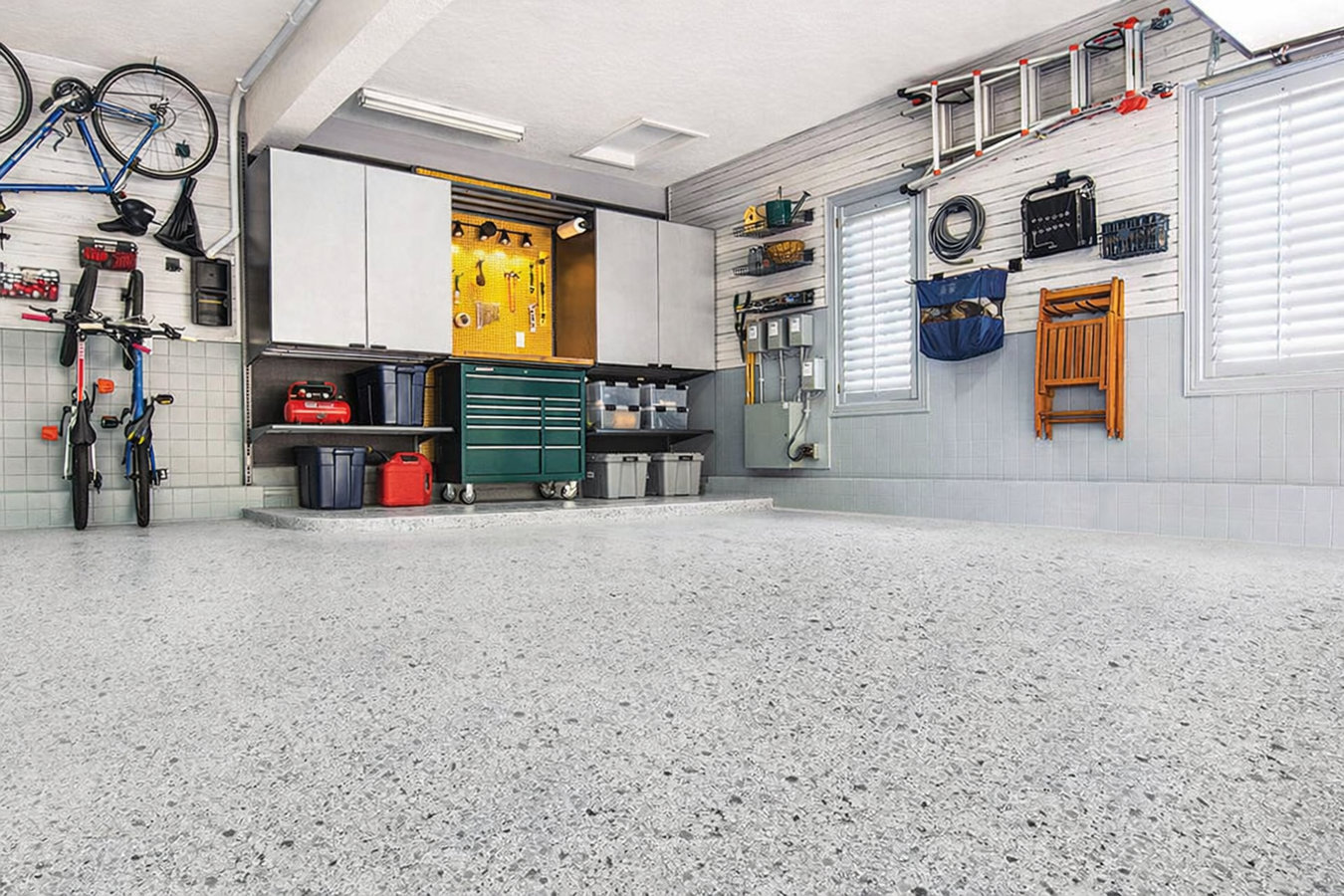
Your garage floor takes a beating every winter. We pour new concrete slabs built for Madison's freeze-thaw cycles, handle permits, and get the job done right so you stop patching the same problems year after year.
Garage floor concrete in Madison, CT involves removing the old slab, grading and compacting the ground underneath, and pouring fresh concrete to a finished surface. Most jobs take one to two days of active work, though the floor needs about a week before you can drive on it again.
A lot of Madison homeowners put off this project because they are not sure whether they need a full replacement or just a repair. If you are seeing surface flaking near the garage door, cracks wider than a pencil line, or water pooling in the wrong direction, the floor is telling you it is time. Garage floor work pairs naturally with other concrete projects - if you are also thinking about the look of your surfaces, our decorative concrete options can transform a plain slab into something you are proud to show.
Madison's coastal soils, road salt, and cold winters are harder on concrete than almost anywhere inland. Getting the base preparation right and using the correct mix for Connecticut conditions is what separates a floor that lasts from one you are patching again in three years.
If the top layer of your garage floor is peeling away in thin chips near the door where slush collects, freeze-thaw cycles and road salt have done their damage. This kind of deterioration accelerates once it starts - waiting makes the repair more involved and more expensive.
Hairline cracks are normal and usually harmless. But if you can fit a coin edge into a crack, or if cracks run all the way across the floor, the slab has likely shifted or settled. In Madison's sandy coastal soils, uneven settling under the slab is a common cause of this kind of cracking.
A garage floor should slope slightly toward the door so water drains out. If you notice puddles after rain or snowmelt, or if the floor appears to slope toward the back wall, the original pour may have been done incorrectly or the slab has settled unevenly over time.
Walk across your garage and knock on the floor with your knuckle in a few spots. A dull or hollow thud means the concrete has separated from the base beneath it - the slab is essentially unsupported in that area and is more likely to crack or fail under the weight of a vehicle.
Most garage floor jobs in Madison are full replacements - the old slab comes out, the base gets graded and compacted properly, and new concrete goes in at the right thickness for how you use the space. For a standard passenger car setup, four inches is typical. If you park a heavy truck or run a workshop in the space, we may recommend going thicker. We also add steel reinforcement before every pour so the slab holds together if cracking ever occurs. After the floor has cured, sealing is the smart next step - especially in Madison where road salt and freeze-thaw cycles are hard on any unprotected surface.
If you want to go beyond a plain gray floor, we can finish the surface with a broom texture for grip, a smooth trowel finish, or tie it into a broader decorative concrete project that also covers your driveway or walkways. And if you are thinking about the full scope of your home's concrete surfaces, we also handle concrete floor installation for indoor spaces like basements and utility rooms.
Best for floors that are cracked, settled, or past the point of patching - removes the old concrete and starts fresh.
Ideal for additions, new construction, or garages that were never finished - gives you a properly graded, reinforced floor from day one.
A broom finish adds grip for wet conditions; a trowel finish gives a cleaner look - both are standard options on every pour.
Recommended for every Madison garage floor after the 28-day cure - protects against road salt and freeze-thaw damage year after year.
Madison sits on the Connecticut shoreline and gets dozens of freeze-thaw cycles every winter. Water seeps into tiny surface pores, freezes, expands, and then thaws - and that repeated expansion is what causes surface flaking and cracking over time. On top of that, cars track in road salt from Route 1 and local roads all season long. Salt is chemically aggressive toward concrete and can cause the top layer to deteriorate within a few years on a floor that was not properly prepared or sealed. The mix design and finishing approach your contractor uses matters far more here than it would in a warmer, drier climate.
Many of Madison's residential neighborhoods were developed between the 1950s and 1980s, and original garage slabs from that era were often poured thinner than today's standards and without the right reinforcement. If your home is more than 30 years old, there is a reasonable chance the existing slab is at or past the end of its useful life. We work throughout Madison and in neighboring communities like Guilford and Clinton, where the same coastal conditions and older housing stock make proper base preparation the most important part of every job.
We reply within one business day. Tell us your garage size, what is currently there, and what you want to accomplish - that is enough to schedule a visit.
We come to your property, measure the space, check the existing slab and drainage, and ask how you use the garage. You get a written estimate that breaks down labor, materials, and permit fees separately - no single-number guesses.
Madison requires a building permit for most garage floor work. We handle the paperwork with the town's Building Department - typically a few business days to a couple of weeks - then confirm your start date.
The old slab comes out, the base gets graded and compacted properly, and new concrete goes in. The pour itself usually takes only a few hours. Plan to keep the garage clear for seven days after the pour before driving on it.
Free estimate, no obligation. We handle the Madison permit and reply within one business day.
(475) 522-8016We pull the required Madison building permit on your behalf - every time, no exceptions. That means a town inspector signs off on the work, which protects you at resale and keeps the project on record.
The sandy, shifting soils common in Madison's shoreline neighborhoods are exactly the reason base preparation matters so much here. We spend the time compacting and leveling the ground underneath because a floor is only as solid as what supports it.
Road salt and freeze-thaw cycles are the two biggest threats to a concrete garage floor in coastal Connecticut. We use a mix and sealer approach recommended by the American Concrete Institute for cold climates so the floor holds up through years of Connecticut winters, not just the first one.
We have been working on garage floors, driveways, and slabs in Madison and the surrounding shoreline towns since 2016. When you call, you are talking to someone who knows the local permit process and local soil conditions - not a call center.
Doing the permit right and getting the base right are not optional extras - they are what determines whether your garage floor is still solid in ten years. That is the standard we hold ourselves to on every job in Madison.
Color, stamp, or polish your concrete surfaces for a finished look that holds up to shoreline Connecticut conditions.
Learn MoreNew concrete floors for basements, utility rooms, and other interior spaces - poured to the right thickness for the load.
Learn MoreSpring slots fill fast - reach out now and we will get on your schedule before the busy season locks up.